




































医学英语发展史

一个不再是大夫的大夫与您共享。
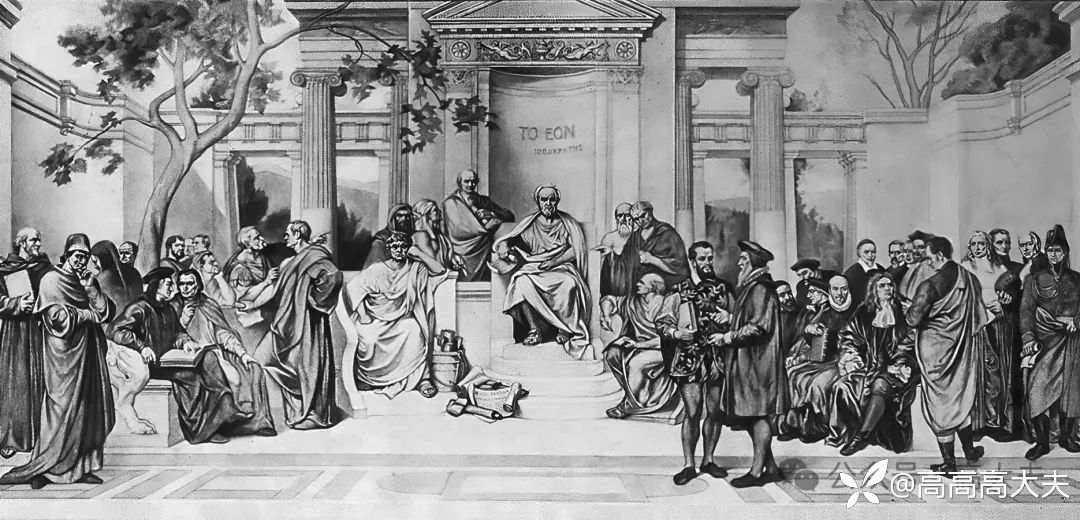
‘Histoire De La Medicine’ by Legrand (1908) based on ‘L'Apothéose d'Hippocrate’ by Bourgeois (1895).
《医学史》莱格朗(1908)基于《希波克拉底的神化》布尔乔亚(1895)
Modern medical terminology includes words of great antiquity and others of very recent coinage. Some ancient terms boast of continuous existence with meaning and form unchanged from some dim, almost prehistoric period to the present. Some have retained their significance but have suffered changes in spelling; in other instances, the reverse has occurred. While this has been going on, the demands of advancing science have necessitated the finding of new words. Some of these so-called new words have been resuscitated from the ancient classics, others have been coined from Greek or Latin roots with a result that would be meaningless to a Greek or Roman. Often an unhappy marriage of two tongues has been consummated, to the horror of the classicists.
现代医学术语包括非常古老和近期新创造的词汇。一些古老的术语自史前为止其形式和意义几乎是没有改变的。有些保留了它们的意义,但在拼写上发生了变化;在其他情况下,情况正好相反。与此同时,科学进步的要求也使得寻找新词成为必要。这些所谓的新词中有一些是从古代经典中复活出来的,还有一些是从对希腊人或罗马人毫无意义的希腊语或拉丁语的词根中创造出来的。令古典主义者感到恐惧的是,经常会有两种语言的不幸结合圆满完成。
All of this sounds as if the result must be a state of confusion, but actually things are not so bad. Although there are many exceptions, there are still a number of well-established principles which dominate the situation. These deserve individual consideration.
这一切听起来似乎必然会导致一片混乱,但事实上情况并非那么糟糕。尽管存在诸多例外,但仍有一些行之有效的原则在起主导作用。这值得予以分别考虑。
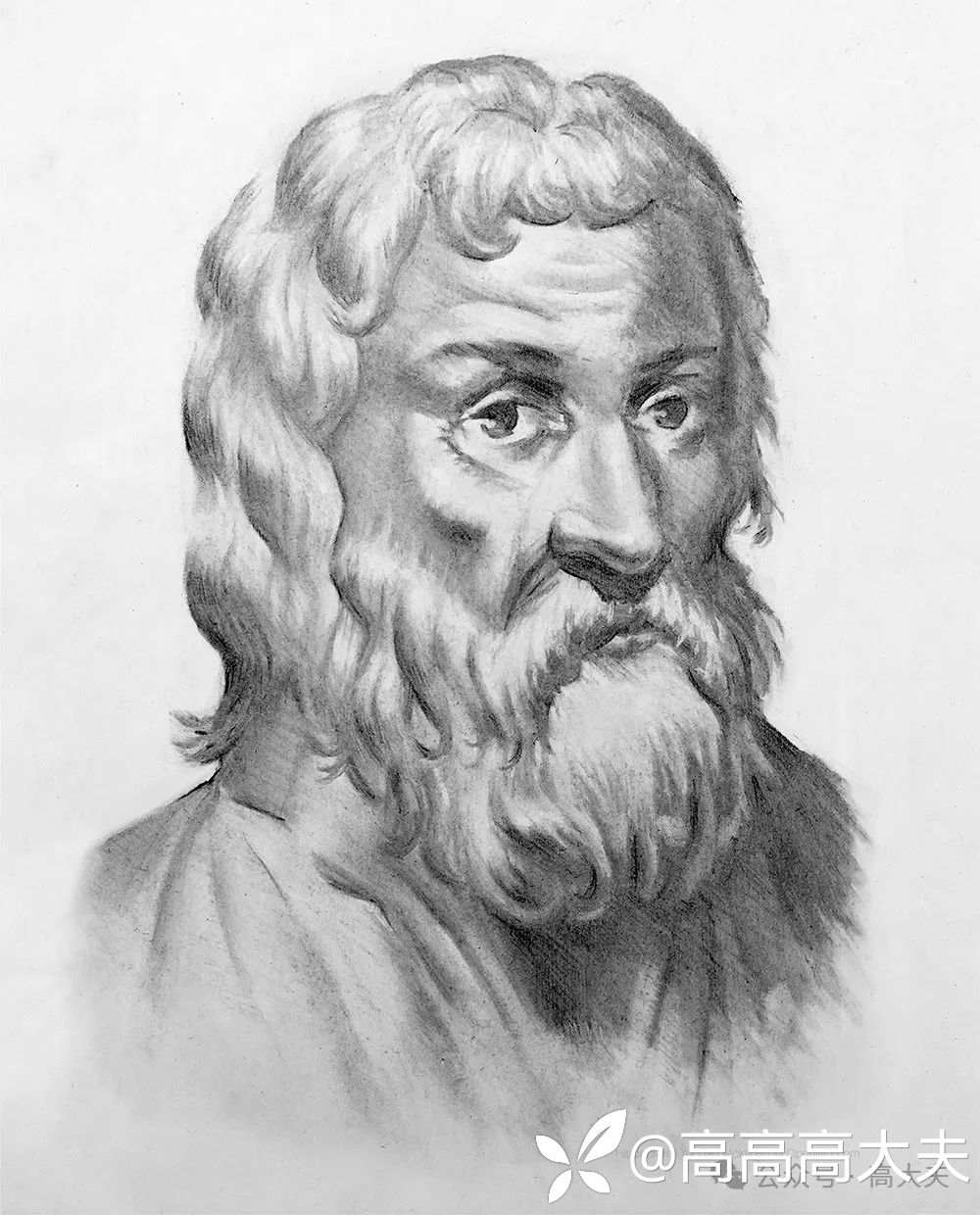
Hippocrates (c. 460-370 BC)
希波克拉底(约公元前460-370年)
First and foremost, one must appreciate the continuing importance of the mass of medical terms which amazingly made their appearance in the writings of Hippocrates (born 460 B.C.). It is not known with any certainty from what earlier sources Hippocrates obtained these words—possibly many were translations of Egyptian terms into Greek, and some revealed the earlier medicine of Crete. Be this as it may, we still use medical terms which first appeared in the writings of Hippocrates; and it is said by Edmund Andrews, in A History of Scientific English, that 75 percent of present-day medical English can be traced back to the Greek of Hippocrates and of the Alexandrine school of the following period. Such familiar terms as arthritis and nephritis were used by Hippocrates, and indeed this modern-sounding suffix, itis, was already tending to supersede the older ending which still persists in such words as pneumonia and ophthalmia.
首先也是最重要的,人们必须认识到大量医学术语的持续重要性,并且令人惊讶地是他们出现在希波克拉底(生于公元前460年)的著作中。我们无法确定希波克拉底有多早来获得这些词汇的——可能有很多是从埃及术语翻译成希腊语的,还有一些揭示了克里特岛早期的医学。尽管如此,我们仍然使用最早出现在希波克拉底著作中的医学术语;埃德蒙·安德鲁斯在《科学英语史》中说,75%的现代医学英语的可以追溯到希波克拉底的希腊语以及后来的亚历山大学派。像关节炎和肾炎这样熟悉的术语被希波克拉底使用,事实上,这个听起来现代的后缀,itis,已经倾向于取代更早时期且在肺炎和眼炎中仍然存在的后缀-nia/-mia。
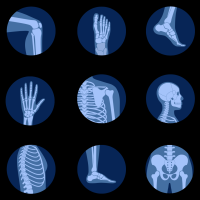
As might be expected, it is in the field of anatomy that most of these early Greek terms were employed and have survived. Also, as would be anticipated, many of these anatomical terms were based merely on a supposed resemblance of the anatomical structure to some familiar object; for example, acetabulum was a vinegar cruet.
正如人们所料,大多数的早期希腊术语都是在解剖学领域使用并保存下来的。而且,正如所预料那样,许多这类解剖术语不过是基于解剖学结构与某些熟悉物体的假定相似性;例如,髋臼是一个醋瓶。
The number of words persisting from the time of Hippocrates until today without having stopped over in Rome is relatively small, compared with the number of terms of obvious Greek derivation which did for a time form part of the Latin medical vocabulary, or which were coined since the eighteenth century.
从希波克拉底时代沿用至今而未曾经过罗马的词汇数量相对较少,相比之下,与那些曾一度成为拉丁医学词汇一部分的明显源自希腊语的术语数量相比,或者自18世纪以来创造的此类数量相比,更是如此。
The physicians from Alexandria who began to invade Rome in the second century B.C. brought Greek terms with them, and at least half of the Latin scientific terms were borrowed from the Greek. No further words were taken from the Greek until the fifteenth century, but in the twentieth century, the rapid increase in scientific knowledge required an enormous number of new words. So many of these have been coined from Greek that today a Greek-appearing scientific term, perhaps with a consonantal diphthong ph or ch in it, is far more likely to be a recent coinage than it is to be a long-used term. Such words may properly be called neoclassicisms.
公元前二世纪,来自亚历山大的医生们开始入侵罗马,带来了希腊术语,至少有一半的拉丁科学术语是从希腊语来的。直到15世纪,再没有从希腊语中提取新的词汇,但在20世纪,科学知识的迅速增长需要大量的新词。这些词中的许多都是从希腊语中创造出来的,以至于今天出现了一个希腊语式的科学术语,可能会在词中带有辅音双元音ph或ch,它更有可能是近期创造的词,而不是一个长期使用的词。这些词称为新古典主义可能更恰当。
We see, therefore, that in the first and second centuries B.C. Greek medical terminology was being used in Rome and, of course, was being influenced in the process. Few words of the earlier Latin terminology survived, and those that did were earthy terms such as penis, testis, and anus. The Greek terms often became latinized with Latin spelling and endings, as, for example, the Greek perikardion became pericardium. This change of Greek k to c was the rule, but it is interesting that in the new coinages of the nineteenth and twentieth centuries one often finds a return to the original Greek k. As a result, it is often impossible to distinguish modern coinages from original Greek terms. It is also often impossible to tell at a glance whether a word comes straight from the Latin or whether it is a latinized Greek term.
因此,我们看到,在公元前1世纪和2世纪,希腊医学术语在罗马被使用,当然,在这个过程中也受到了影响。早期拉丁语中的几乎没有几个留存下来,那些留存下来的确实是早期的也是比如阴茎、睾丸和肛门一类粗俗的词。希腊术语经常被拉丁化,有拉丁的拼写和后缀,例如,希腊语的perikardion变成了pericardium。将希腊语中的k改为c是一种规则,但有趣的是,在19世纪和20世纪的新造词中,人们经常发现它们又回到了原来的希腊语k。因此,通常不可能将现代新词与原来的希腊语术语区分开来。通常也不可能一眼就看出一个词是直接来自拉丁语还是拉丁化的希腊词。
Still other changes went on in medical terminology in Rome, the results of which continue to plague us. Sometimes a Greek term existed in two forms, one with a Greek ending, the other with a Latin; thus thermic and thermal, dermic and dermal. Even worse for us was the habit of continuing to use Latin nouns for an anatomical structure but of turning to Greek for names for pathological processes in that same organ. Thus ren = the kidney, but nephritis instead of renitis; oculus = the eye, but ophthalmitis. No wonder terminology today is difficult. In that period, also, many hybrids were coined. Then, as now, Greek was preferred for new coinages, because Greek, with its many prefixes and suffixes, lends itself to this purpose better than Latin does. Our modern medical dictionaries, it is said, are a quarter-filled by words formed with a prefix or suffix. Only Greek words with diphthongs difficult to pronounce were avoided, although some, such as pneumonia and dyspnea, are with us still.
罗马的医学术语还发生了其他变化,其结果继续困扰着我们。有时一个希腊词以两种形式存在,一种以希腊语结尾,另一种以拉丁语结尾;热的和热的,真皮的和真皮的。对我们来说更糟糕的是,我们习惯继续用拉丁语的名词来描述解剖结构,转而用希腊语来描述同一器官的病理过程。因此ren=肾脏,但是用nephritis表示肾炎而不是renitis表示肾炎;oculus=眼睛,但眼炎却是ophthalmitis。难怪今天的专业术语如此难懂。在那个时期,也创造了许多混合词。就像现在一样,希腊语是创造新词的首选,因为希腊语有许多前缀和后缀,比拉丁语更适合创造新词。据说,我们的现代医学词典有四分之一是由前缀或后缀组成的单词。尽管有些单词因为具有双元音难以发音的希腊词被避免使用,但是像肺炎和呼吸困难pneumonia and dyspnea,仍然与我们同在。
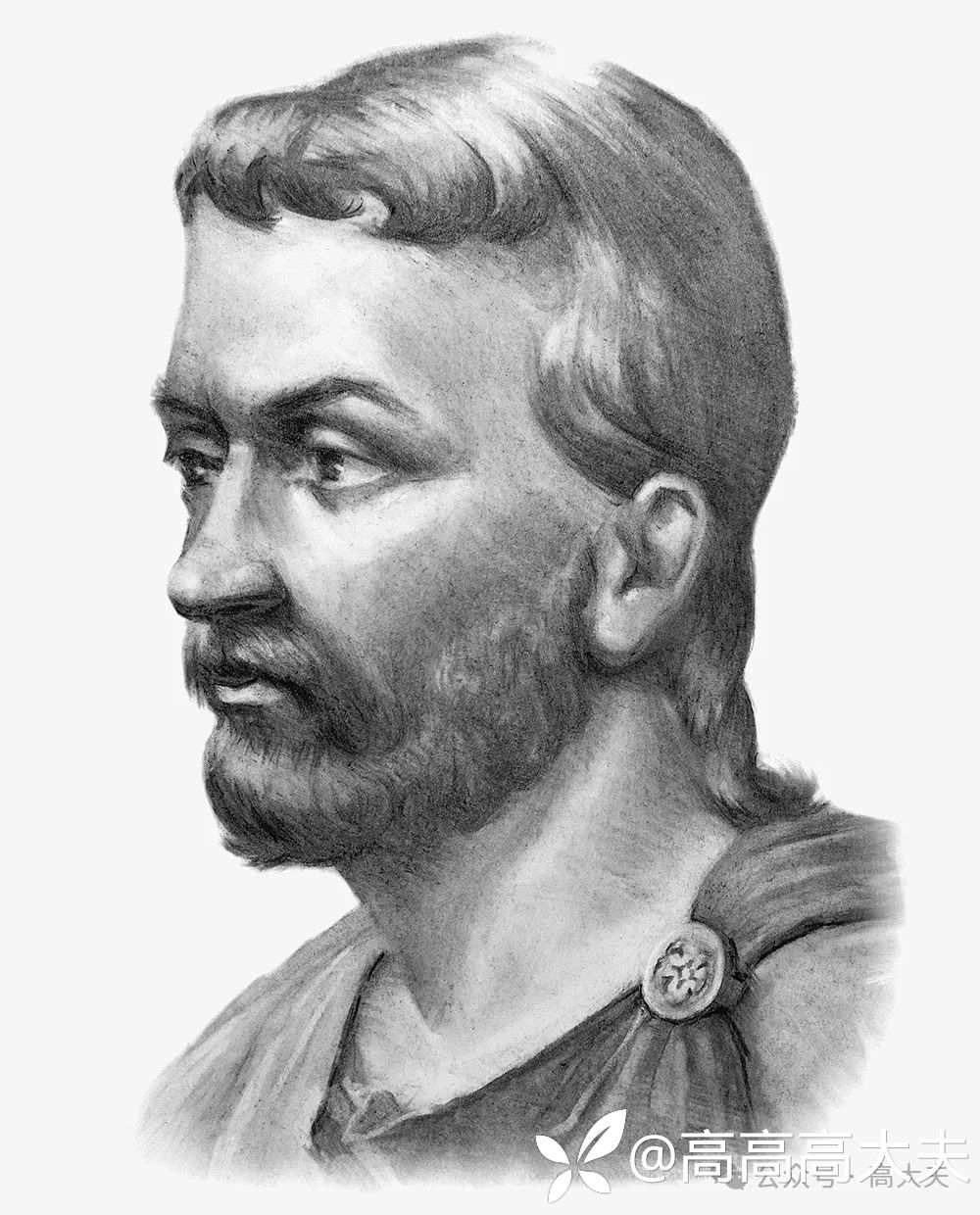
A. Celsus (c. 25 BC - 50 AD)
A.塞尔苏斯(公元前25年-公元50年)
Much of modern scientific terminology is found in the writings of Celsus, and as one looks up some apparently modern term one finds the note, “used by Celsus or Pliny,” both of whom lived in the first century A.D. After their time, however, came the dark period in which much of Latin and Greek medicine was buried out of sight and survived only in religious texts. Some few terms survived in the medical practice of the time, chiefly in the hands of the monks, but not until the classical writings of Hippocrates and Galen were re-translated from Arabic editions into Latin did the whole earlier medical terminology again become available. In this process a few of the original Arabic terms, when they defied easy translation, were brought over unchanged, as al cohol and al chemy. With the revival of scientific knowledge during the Renaissance in the sixteenth century, medical science also came to life, especially in anatomy. Into English came an increasing flow of words, at first only from the Latin, which, of course, included Greek terms—as, for example, nausea, larynx, and skeleton. These words were added to the existing Anglo-Saxon terminology, and in the meantime the Norman conquest of England had opened the way for the importation of scientific words of French derivation in the following centuries.
现代科学术语中的很大一部分都能在塞尔苏斯(Celsus)的著作中找到,当人们查阅某些看似很现代的术语时,会发现这样的注释:“塞尔苏斯或普林尼(Pliny)曾使用过”,这两人都生活在公元1世纪。然而,在他们之后,迎来了一段黑暗时期,大量拉丁语和希腊语的医学内容被埋没,仅留存于宗教典籍之中。当时仅有少数术语在当时医学实践中得以留存,主要掌握在修道士手中,但直到希波克拉底(Hippocrates)和盖伦(Galen)的经典著作从阿拉伯语版本重新翻译成拉丁语后,早期的整个医学术语体系才再次为人所用。在这个过程中,一些原本的阿拉伯语术语,由于难以轻松翻译,便原封不动地被沿用了下来,比如“alcohol”(酒精)和“alchemy”(炼金术)。随着16世纪文艺复兴时期科学知识的复兴,医学也焕发生机,尤其是在解剖学方面。越来越多的词汇开始涌入英语,起初仅来自拉丁语,当然其中也包含希腊语词汇,例如“nausea”(恶心)、“larynx”(喉)以及“skeleton”(骨骼)。这些词汇被添加到已有的Anglo-Saxon 语言体系中,与此同时,诺曼人对英格兰的征服为后续几个世纪源自法语的科学词汇的引入开辟了道路。
In France, Latin during five hundred years had grown into French, and any medical terms staying for such a long visit became changed, in just the same fashion that Greek words had been altered in Rome. So the words imported into English scientific terminology often hid their actual etymology under a Gallic disguise—as, for example, migraine and cretin did when they came over toward the end of the eighteenth century. Words still continue to come from French into English medical language, but most of these are newly formed words coined to meet a need, such as anaphylaxis. Similarly, from Germany has come a stream of neoclassicisms, such as leukemia, coined at the necropsy table by Virchow, who indeed originated many new terms. Few truly German words have entered our vocabulary.
在法国,拉丁语历经五百年演变出了法语,任何在这片土地上留存如此长时间的医学术语也都发生了变化,其变化方式就如同希腊语词汇在罗马曾经历的改变一样。因此,那些被引入英语科学术语体系的词汇,常常在法语的“伪装”下掩盖了它们实际的词源——例如,“migraine”(偏头痛)和“cretin”(呆小病患者)在18世纪末传入英语时便是如此。词汇仍持续从法语进入医学英语语言当中,不过其中大多数都是为了满足需求而新创造出来的词,比如“anaphylaxis”(过敏反应)。同样地,从德国也涌入了一批新古典主义词汇,像“leukemia”(白血病),它是由魏尔肖(Virchow)在尸检台上创造出来的,实际上他还创造了许多新术语。不过,真正源自德语的词汇很少进入到我们的词汇库中。
Just as Latin words were altered in France, so various terms underwent change in England. This is a well recognized process, which progresses more rapidly when a word enters common speech and is not preserved in its initial form in print. Andrews quotes many examples: rickets from rachitis, palsy from paralysis, and, in recent times, “flu” from influenza. Dropsy from hydropsis is another.
正如拉丁语词汇在法国发生了变化一样,各种各样的术语在英国也经历了改变。这是一个广为人知的过程,当一个词进入日常用语,且其最初的书写形式未被保留时,这种变化的进展就会更快。安德鲁斯(Andrews)列举了许多例子:“rickets”(佝偻病)源自“rachitis”,“palsy”(瘫痪,麻痹)源自“paralysis”,而且近些年来,“flu”(流感)源自“influenza”。“dropsy”(水肿)源自“hydropsis”也是其中一例。

C. Galen (129-216 AD)
盖伦(公元129-216年)
Of the coining of new terms there is and can be no end. Sometimes the originator of the term turns for his roots to Homer or Vergil rather than to Hippocrates or Galen. Modern bacteriological terminology is a good example of this. Furthermore, when no suitable name or term can be thought up, there is a tendency to evade the issue by the use of a personal name, or eponym. Many of the new terms would have to be explained to Hippocrates just as they must be to us; what would he make of ballistocardiogram—perhaps a love letter? (Gr. ballein = to throw, kardia = heart, and gramma = a writing.)
新术语的创造是永无止境的,过去如此,将来也会如此。有时候,术语的创造者会从荷马(Homer)或维吉尔(Vergil)的作品中去寻找词根,而不是从希波克拉底或盖伦那里。现代细菌学的术语就是这方面的一个很好的例子。而且,当想不出合适的名称或术语时,人们往往倾向于通过使用人名,也就是以人名为名(名字命名法)来回避这个问题。许多新术语对希波克拉底来说就如同对我们一样,都得加以解释才行;他会如何理解“ballistocardiogram”(心冲击描记图)这个词呢——也许会把它当成一封情书吧?(在希腊语中,“ballein”意为“投掷”,“kardia”意为“心脏”,“gramma”意为“书写、记录”。)
Despite all the study that has been given to the subject of medical terminology, there are many medical terms whose derivation is still uncertain. Most of these are, as might be expected, anatomical terms, for these terms are the oldest. Many of them date back more than two thousand years, and it is not surprising that such ancient words may lack a birth certificate. Included in the list of terms of uncertain origin are words as familiar to us as tonsil and abdomen. The Romans used the word tonsilla, and in the old medical writings this term was used to indicate the tonsil—but in Roman days the word meant a mooring post for a ship. There is even more confusion about the derivation of the word abdomen. It is found in the writings of Pliny (A.D. 50), used with its present meaning. Some suggest it comes from abdere, to hide away; others, that it is related to the word adeps, meaning fat.
尽管人们对医学术语这一主题进行了诸多研究,但仍有许多医学术语的词源尚不明确。正如所料,这些术语大多是解剖学方面的,因为这些术语是最古老的。它们中的许多可以追溯到两千多年前,如此古老的词汇可能没有词源“出生证明”也就不足为奇了。在词源不确定的术语列表中,有像“tonsil”(扁桃体)和“abdomen”(腹部)这样我们非常熟悉的词汇。罗马人使用“tonsilla”这个词,在古老的医学著作中,这个词用于指代扁桃体——但在罗马时期,这个词的意思是船的系泊柱。“abdomen”这个词的词源更加混乱。它出现在普林尼(公元50年)的著作中,意思和现在一样。有些人认为它来自“abdere”,意思是“隐藏”;另一些人则认为它与“adeps”这个词有关,“adeps”的意思是“脂肪”。
From this very brief discussion we learn what a complex parentage our medical terminology has. Less than five percent of it is of Anglo-Saxon origin—the rest is from the Greek, Latin, Arabic, Semitic, French, or Italian. Greek terms often were latinized and were subsequently modified in France; we ourselves have been, and still are, anglicizing them. Any pretense of obeying the rules of Greek or Latin grammar has been abandoned in dealing with words of those tongues. Fortunately, the number of living teachers who still insist on the use of stigmata, instead of stigmas, is rapidly becoming smaller. Let us use the adjective saphenous as a noun if we want to—let us do anything we can to make medical terminology, which is a tool we must use, a tool easier to use and one perhaps to enjoy.
通过这非常简短的讨论,我们了解到医学术语有着多么复杂的“出身”。其中仅有不到5%源自Anglo-Saxon,其余的则来自the Greek, Latin, Arabic, Semitic, French, or Italian。希腊语术语常常被拉丁化,随后又在法国被修改;我们自己过去一直在对它们进行英语化处理,而且现在也仍在这么做。在处理这些语言的词汇时,遵循希腊语或拉丁语语法规则的那种做法早已被摒弃了。幸运的是,仍然坚持使用“stigmata”(特征、痕迹,stigma的复数形式)而非“stigmas”的在世教师的数量正在迅速减少。如果我们愿意的话,就让我们把形容词“saphenous”(隐静脉的)当作名词来用吧——让我们尽己所能,使医学术语(这是我们必须使用的一种工具)变得更易于使用,甚至能让我们乐于使用它。
Author: O. H. Perry Pepper, M.D.
Excerpted from Medical Etymology: The History and Derivation of Medical Terms for Students of Medicine, Dentistry, and Nursing. Oliver Hazard Perry Pepper, M.D. W.B. Saunders Company, United Kingdom, 1949. Edited to clarify dates and sources.
Original illustrations by Dan McIntosh for OpenMD.com
作者: O. H. 佩里·佩珀(O. H. Perry Pepper),医学博士
节选自 《医学词源学:面向医学、牙科及护理学学生的医学术语历史与词源》 。奥利弗·哈泽德·佩里·佩珀(Oliver Hazard Perry Pepper),医学博士。W.B. 桑德斯出版公司,英国,1949年。为阐明日期和来源已做编辑处理。
原始插图由丹·麦金托什(Dan McIntosh)为OpenMD.com绘制。